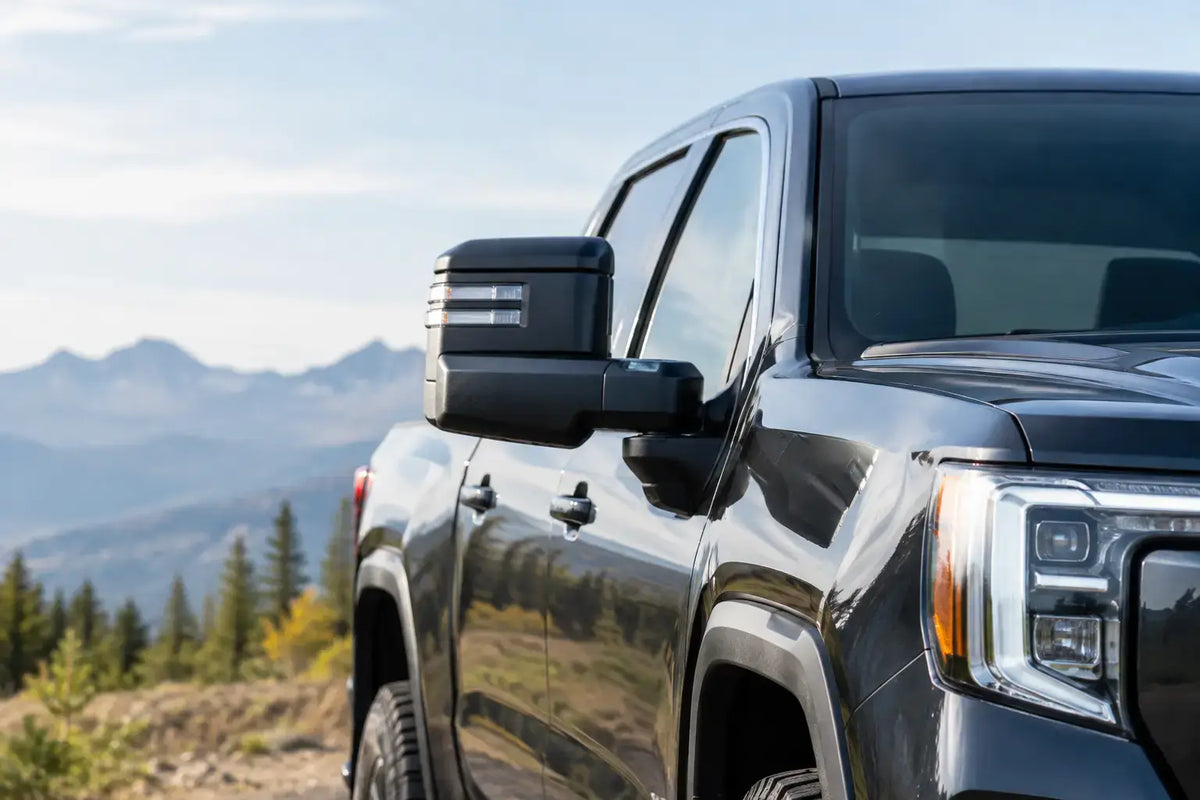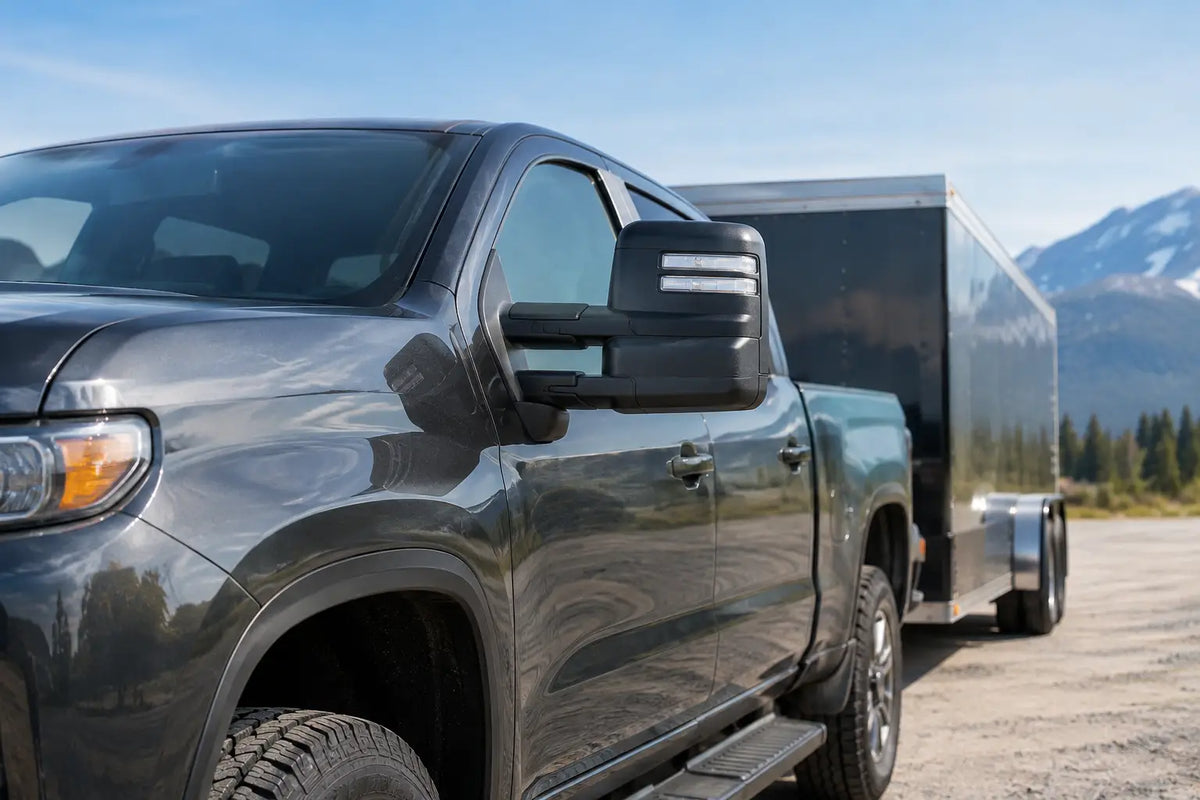

A long trailer can disappear beside a stock mirror right when you need the clearest view of it. Ford Super Duty towing mirrors give your F-250, F-350, or F-450 the wider rearward sightline needed for fifth wheels, equipment trailers, campers, and work loads. But width alone is not the answer. A mirror that shakes at highway speed, leaves factory connectors unused, or fights the door mounting points is not an upgrade.
Fitment first. The right mirror should bolt onto your truck cleanly, support the functions your truck already has, and stay steady when the road gets rough.
Ford Super Duty Towing Mirrors Start With Exact Fitment
Super Duty trucks have changed across generations, and mirror compatibility follows those changes closely. A mirror designed for one body style may look close enough to fit another, but the mounting pattern, door contours, electrical connector, glass shape, and supported features can be different.
Start by confirming the model year, then verify whether the truck is an F-250, F-350, or F-450 and whether it has a regular, SuperCab, or crew cab configuration when the product application calls for it. The most important detail is the factory mirror equipment already on the truck. Power adjustment, heated glass, turn signals, puddle lamps, power folding, blind-spot monitoring, and camera systems all affect what a replacement mirror can support.
Do not assume a fully loaded mirror will add every feature to a lower-trim truck. Many functions require factory wiring, modules, switches, and programming. A power-folding mirror, for example, needs more than a power-folding motor. If the truck was not equipped for that function from the factory, it may not operate without additional components. That is not a mirror defect. It is a compatibility issue that should be handled before you order.
A direct-fit towing mirror uses factory-style mounting locations and an application-specific harness to avoid cutting, splicing, drilling, or improvising at the door. That protects the truck, shortens installation time, and makes future service less complicated.
Questions Worth Answering Before You Buy
Check whether your current mirrors are manual or power-adjustable, heated or non-heated, and equipped with signal lamps or marker lights. Confirm the number and style of electrical connectors behind the mirror trim panel instead of relying only on a photo. Also consider whether your truck has power-fold capability, cameras, or blind-spot features that must remain functional.
If your Super Duty is used in a fleet, on a jobsite, or for frequent RV travel, measure the real clearance around your parking spaces and garage doors. Extended mirrors improve trailer visibility, but they also put more width outside the cab. Telescoping designs give you the flexibility to pull them in when the trailer is unhooked and extend them when the load is behind you.
What Makes a Towing Mirror Steady Under Load
A towing mirror is a lever bolted to the door. The farther it extends, the more wind, road vibration, and trailer-induced movement it must manage. Cheap construction often reveals itself as blurred reflections, loose housings, or glass that will not hold its adjustment after a few hard miles.
The mounting system matters more than flashy exterior styling. Look for reinforced internal steel brackets, heavy-duty mounting studs, and a high-density foam gasket that seats tightly against the door. The bracket carries the load. Strong studs secure it. The gasket helps prevent movement at the mounting surface while protecting the paint from harsh contact.
Mirror glass also deserves attention. A useful towing setup gives you a broad flat view for normal traffic and a lower convex section for lanes, curbs, trailer wheels, and objects near the rear corners. The convex glass does not replace checking over your shoulder or using trailer cameras, but it reduces blind areas that a standard mirror leaves behind.
There is a trade-off. Bigger mirror housings can create more wind noise and need more care around narrow gates, drive-throughs, and wooded trails. For a truck that tows only a few times each season, a compact telescoping mirror may be the best balance. For a Super Duty that pulls daily, the extra coverage is usually worth the added size.
Choose Lighting Features That Earn Their Place
Integrated lighting should improve awareness, not just change the truck's appearance. LED turn signals in the glass or housing give traffic beside the truck a clearer indication of your next move. Puddle lights can help when stepping out at a dark campsite, loading dock, or jobsite. Amber clearance lights can add visibility at the outer edge of a wide truck-and-trailer combination.
Sequential switchback lighting is a popular upgrade because it can combine a clean white running-light appearance with an amber turn signal. It is a purposeful feature when it is wired correctly and designed for the vehicle. The key is making sure the harness and connector match the supported factory circuits.
Factory-supported functions should remain factory-simple. If a mirror claims plug-and-play installation but requires you to cut into the door harness for basic signal operation, stop and verify the application. Some added functions may reasonably need supplemental wiring. Core functions that the truck already has should not require electrical guesswork.
Heated Glass, Cameras, and Power Folding
Heated glass is a practical feature for winter work, early launches, and wet weather. It clears condensation and frost faster than wiping the mirror with a glove, and it helps keep the view usable when conditions are changing quickly.
Power folding is convenient, especially for trucks that move between open roads and tight parking areas. Still, it is only worth paying for if your Super Duty has the compatible factory equipment or you are prepared for the required upgrade path. The same rule applies to camera and blind-spot systems. Preserve those features only with a mirror specifically built to support them. Do not trade critical safety hardware for a housing that merely looks right.
A Clean Installation Protects the Upgrade
Most direct-fit Ford Super Duty towing mirrors can be installed from inside the door after removing the interior trim panel and factory mirror fasteners. Work carefully around clips, vapor barriers, wiring retainers, and the painted door edge. Support the original mirror before removing the last fastener so it cannot drop against the truck.
Before fully reassembling the door, connect the new mirror and test each available function. Check glass adjustment, heat, turn signals, puddle lamps, marker lights, and power folding where equipped. This is the right time to correct a connector that is not fully seated, not after the door panel is back in place.
Once installed, set both mirrors with the trailer connected. Adjust the main glass so you can see the lane beside the trailer without filling the entire mirror with the truck's bedside. Aim the convex section lower and farther outward to monitor the trailer tires, trailer edge, and adjacent lane. The goal is overlap between your mirrors, camera view, and natural shoulder check - not a single perfect angle.
Keep Your Mirrors Working Like Truck Equipment
Towing mirrors live in the weather. Wash off road salt, mud, diesel residue, and bug buildup before it hardens around seams and light lenses. Use a soft cloth and automotive-safe cleaner on the glass and housing. Avoid aggressive solvents that can haze lenses or dry out finishes.
Periodically check for loose hardware, damaged lenses, water intrusion, and glass that has developed excessive vibration. A mirror that suddenly shakes more than normal may have a loose fastener, a damaged bracket, or an issue inside the housing. Address it early. Visibility problems tend to show up when the trailer is loaded, the wind is up, and there is no room for equipment to fail.
Nocvola builds direct-fit mirror upgrades around vehicle-specific mounting, wiring compatibility, reinforced brackets, and the functions Super Duty owners actually use. That is the standard to expect from any mirror you put on a working truck.
Your Super Duty already has the capacity to pull serious weight. Give it mirrors that let you see the job clearly, hold their position on the road, and fit the truck without compromise.