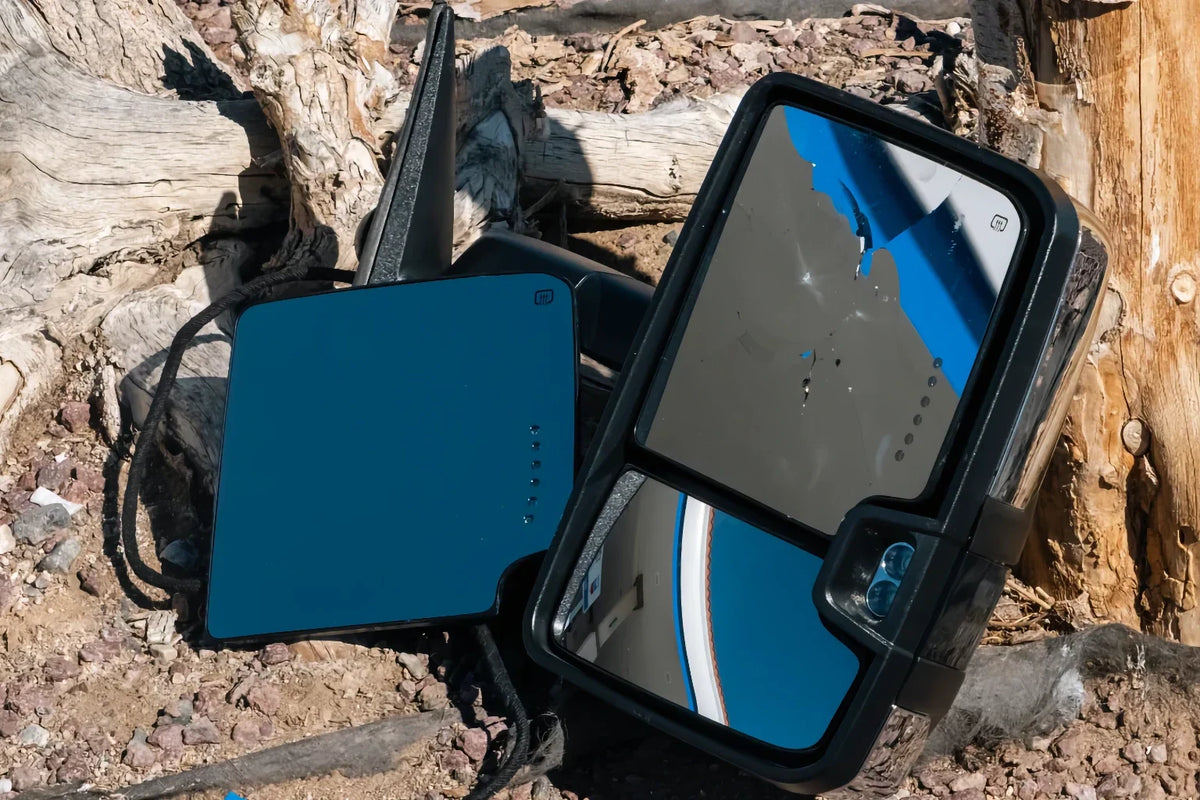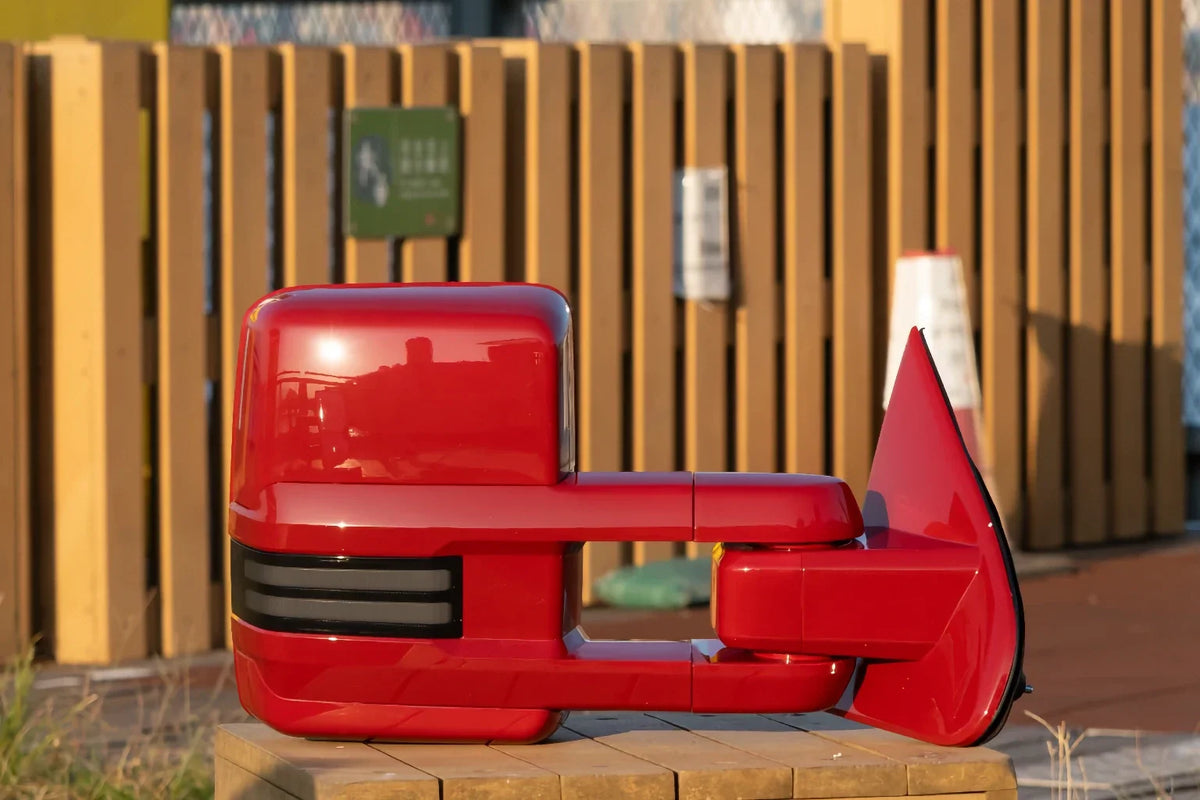

Knowing how to clean tow mirrors correctly helps maintain clear visibility without scratching the glass, damaging the housing finish, or putting unnecessary stress on the folding mechanism. A simple microfiber cloth, mild cleaning solution, and regular visual inspection are enough for routine care.
The safe rule: clean gently, avoid high-pressure water around seams and connectors, never force a stiff or powered mirror, and stop if you find cracked glass, loose mounting, damaged wiring, smoke, or signs of overheating.
What You Need to Clean Tow Mirrors
- Two or more clean, soft microfiber cloths
- Clean water for rinsing away loose dirt
- A small amount of mild automotive wash solution or mild dish soap diluted in water
- A glass cleaner suitable for automotive mirrors, if needed
- A separate dry microfiber cloth for final wiping
Do not use: abrasive pads, brushes with stiff bristles, paper towels that may carry trapped grit, solvent-based cleaners, strong acids or alkalis, or aggressive polishing compounds. Do not spray cleaner directly into seams, vents, switches, wiring connectors, or powered mechanisms.
How to Clean Tow Mirrors: Step by Step
1. Park safely and check the mirror first
Park on a stable surface away from traffic. Before cleaning, look for cracked glass, loose parts, mounting movement, damaged wiring, or anything that could make the mirror unsafe to handle.
If the mirror has powered folding, do not move it by hand to create a better cleaning angle. Leave it in its normal position or use the control procedure in the exact product manual.
2. Rinse away loose grit before wiping
Dust, sand, and dried mud can scratch a mirror or housing when rubbed. Gently rinse away loose debris with clean, low-pressure water before touching the surface.
If you cannot rinse first, use plenty of clean water on a soft cloth and lift dirt away gently rather than scrubbing a dry surface.
3. Clean the mirror glass gently
For routine cleaning, use a damp microfiber cloth and a small amount of mild cleaning solution. Wipe with light pressure and avoid working grit back across the glass.
If you use a glass cleaner, apply it to the cloth rather than spraying the mirror assembly. This helps keep liquid away from the housing seams, electrical components, and backing areas.
Use a second clean, dry microfiber cloth to remove remaining moisture and reduce streaks. A clean mirror improves visibility, but cleaning will not correct distortion, a loose mirror, or an electrical fault.
4. Wipe the housing and mirror arm separately
Use a fresh cloth and mild automotive wash solution for the housing and arm. Remove bug residue, dust, and road grime without aggressive scrubbing.
Matte, gloss, chrome, and painted finishes should not be treated with abrasive cleaners or polishing compounds unless the exact product care instructions approve them. When in doubt, use only mild soap, water, and a soft cloth.
5. Dry exposed surfaces without forcing water into gaps
Wipe accessible surfaces dry with a clean microfiber cloth. Do not use compressed air to drive water deeper into seams, and do not aim a pressure washer at the mirror head, pivot area, gasket, connector, or wiring path.
High-pressure water is not a cleaning shortcut for an electrical mirror assembly. If you notice persistent moisture inside the assembly or a light that does not behave normally after washing, stop further wet cleaning and have the configuration checked.
How to Remove Bugs, Mud, and Road Grime
Let the cleaning solution do the work. Hold a damp microfiber cloth against the affected area briefly to soften residue, then wipe gently. Repeat with a clean section of the cloth instead of increasing pressure.
For dried mud, remove as much loose material as possible with low-pressure water before wiping. Avoid scraping with a fingernail, plastic card, razor blade, or hard tool.
If a stain does not respond to mild cleaning, do not escalate to an unknown solvent. Check the care instructions for your finish or contact support with a clear photo.
Winter Care: Snow, Ice, and Frozen Mirrors
- Brush loose snow away gently with a soft, non-abrasive tool.
- Do not chip ice from the glass or force a frozen mirror to fold or extend.
- Do not pour hot water over a cold mirror assembly.
- If your truck and mirror support heated glass, use that function as described in the vehicle and product instructions—not as a substitute for safe snow and ice removal.
- If a powered folding mechanism does not respond in freezing conditions, do not repeatedly cycle it or push the mirror head by hand.
After winter driving, gentle low-pressure cleaning can help remove road grime. Keep water away from seams and electrical areas, and dry accessible surfaces afterward.
Manual Fold and Power Fold Care
Manual folding
Move the mirror only in the direction and manner described in the product manual. If it feels unusually stiff, do not force it. Check for visible ice, trapped debris, contact with nearby trim, or incorrect mounting.
Power folding
Do not manually force a powered mirror head. If the function does not respond, confirm that you have a Power Fold variant, check compatible original vehicle equipment and wiring, and follow the exact control procedure.
Do not spray lubricant into a hinge, pivot, motor area, or electrical connector. NOCVOLA does not provide a universal lubrication instruction for every mirror configuration; an inappropriate lubricant can attract dirt or contaminate nearby components.
If the mirror remains stiff or unresponsive, stop and use the Towing Mirror Troubleshooting Guide rather than applying force.
Simple Tow Mirror Maintenance Checklist
During a regular wash—and before a long towing trip—check:
- Glass: cracks, chips, unusual movement, or distortion that was not present before
- Housing: cracks, loose parts, impact marks, or finish damage
- Mounting area: even seating, unusual gaps, trapped material, or movement
- Wiring: visible pinching, tension, abrasion, or connector issues
- Lights: expected operation of the functions included in your configuration
- Other equipped functions: mirror adjustment, heating, folding, and blind-spot indicator only where supported
Do not over-tighten mounting hardware to compensate for movement or vibration. The mounting base, gasket, harness routing, and installation sequence must follow the exact product manual.
What Cleaning Will Not Fix
| What you notice | What to do instead of more cleaning |
|---|---|
| Cracked or damaged glass | Photograph the damage and packaging if shipping damage is suspected; contact support before discarding evidence |
| Mirror vibration or an insecure mounting area | Stop and have the mounting checked; do not compensate with excessive tightening |
| Turn signal or running light not working | Confirm the selected lighting configuration, original equipment, and connector seating |
| Power Fold not responding | Do not force the mirror head; verify the variant, compatible equipment, connector, and control procedure |
| Smoke, melted wiring, overheating, or warning lights | Stop using the affected function and contact a qualified installer or support |
If your tow mirror lights are not working after installation, read our safe lighting-check guide. Do not guess wire colors, fuse assignments, pin locations, or 12V test procedures from another vehicle.
Care, Damage, and Warranty Are Different Questions
Routine cleaning helps with appearance and visibility, but it does not turn impact damage, modification, or an installation problem into a warranty defect.
The current NOCVOLA Warranty Policy distinguishes covered defects from exclusions such as accidental impact, custom modifications, and cosmetic wear—including damage associated with harsh chemical wash products. Review the NOCVOLA Warranty Policy for the actual coverage terms.
Contact support before returning an item or attempting a repair. For glass, folding, lighting, vibration, or moisture concerns, provide your order number, vehicle details, exact product configuration, clear photos, and a short video where useful. Coverage and remedies depend on the current policy and claim review.
The Simple Tow Mirror Care Routine
- Rinse away grit with low-pressure water.
- Use mild cleaning solution and a soft microfiber cloth.
- Apply cleaner to the cloth, not into the assembly.
- Avoid high-pressure water around seams, connectors, and pivots.
- Do not scrape ice, force folding, or spray lubricant into the mechanism.
- Inspect the glass, mounting, wiring, and equipped functions regularly.
- Stop and ask for help when the issue goes beyond surface cleaning.
For configuration-specific assistance, use the NOCVOLA Contact Us page. Include your order number if you have one, plus the vehicle, original mirror equipment, selected options, and clear photos of the concern.
FAQ: Cleaning and Maintaining Tow Mirrors
What is the best way to clean tow mirrors without scratching them?
Rinse away loose grit first, then use mild cleaning solution and a clean microfiber cloth with light pressure. Dry with a separate clean cloth. Avoid abrasive pads, hard scraping, and harsh chemicals.
Can I use glass cleaner on towing mirrors?
A glass cleaner suitable for automotive mirrors can be used when needed. Apply it to the cloth rather than spraying the assembly, and keep liquid away from seams, backing areas, connectors, and electrical components.
Can I pressure wash towing mirrors?
Avoid directing high-pressure water at the mirror head, seams, gasket, connectors, pivots, or wiring path. Use gentle, low-pressure rinsing and mild hand cleaning instead.
Should I lubricate a stiff tow mirror hinge?
Do not apply a generic lubricant or spray into a hinge, pivot, motor, or connector. Check for ice, debris, trim contact, or incorrect installation and follow the exact product instructions. If the cause is unclear, contact support.
Can I push a Power Fold mirror by hand to clean it?
Do not force a powered mirror head by hand. Leave it in its normal position or follow the exact product manual’s control procedure. If it does not respond, stop rather than applying force.
How do I clean ice off tow mirrors?
Remove loose snow gently, avoid scraping or hot water, and do not force a frozen mechanism. Use supported vehicle functions as described in the applicable instructions. Seek assistance if a powered function remains unresponsive.
Why is my mirror still not working correctly after cleaning?
Cleaning only addresses surface dirt. A lighting, folding, heating, vibration, connector, or mounting problem needs a separate configuration and safety check. Use the troubleshooting guide or contact NOCVOLA Support with photos and vehicle details.